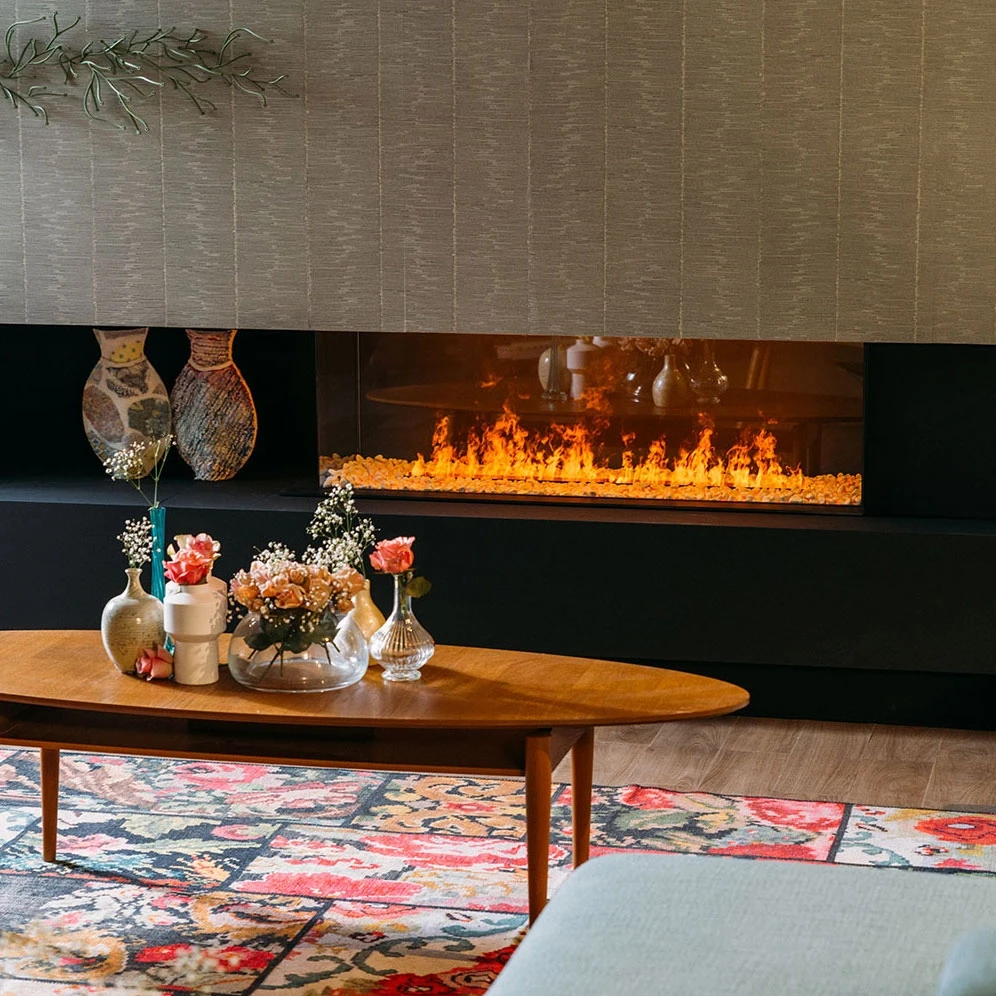

The technology behind realistic electric fireplaces has made enormous progress, transforming them from simple heating appliances into genuine interior design features.
Today, the best models use innovative LED technologies, optical effects and fuel beds to create a highly realistic fire experience.
Key Takeaways
- Modern electric fireplaces combine multiple technologies to create flames that are virtually indistinguishable from real fire.
- Additional features such as ember effects, fuel beds and audio systems help create the impression of a real fire.
- Realistic electric fireplaces require minimal maintenance, are easy to install and offer safety advantages compared with real flames.
- Leading brands such as Dimplex, British Fires and Faber offer customisable flame effects, with adjustable height, colour and intensity.
What Makes an Electric Fireplace Look Realistic?
The difference between a basic electric fireplace and a truly realistic one lies in several technological advancements that work together to create a highly realistic flame effect.
Understanding these features will help you make an informed choice when selecting the ideal fireplace for your home.
Below, we’ll explain how each of these technologies works.
LED Flame Systems
LED systems are the true creators of the fire effect. They use screens that continuously project high-resolution flame images, with colour variations and flames that constantly change, eliminating the repetitive cycles typical of older electric fireplaces.
LED technology also offers exceptional energy efficiency. The visual effects consume very little electricity while delivering maximum impact. LED components typically last more than 50,000 hours, ensuring years of reliable operation with virtually no maintenance.

3D Optics, Reflective Glass and Projection
One of the most significant advances in realistic flame effects comes from 3D optical systems. Starting with the LED-generated flame effects, mirrors, angled glass panels and special lenses are positioned to alter the reflections and image, creating a three-dimensional effect.
These projection systems can reproduce incredibly detailed flame movements, offering a visual experience that can be difficult to distinguish from real combustion.
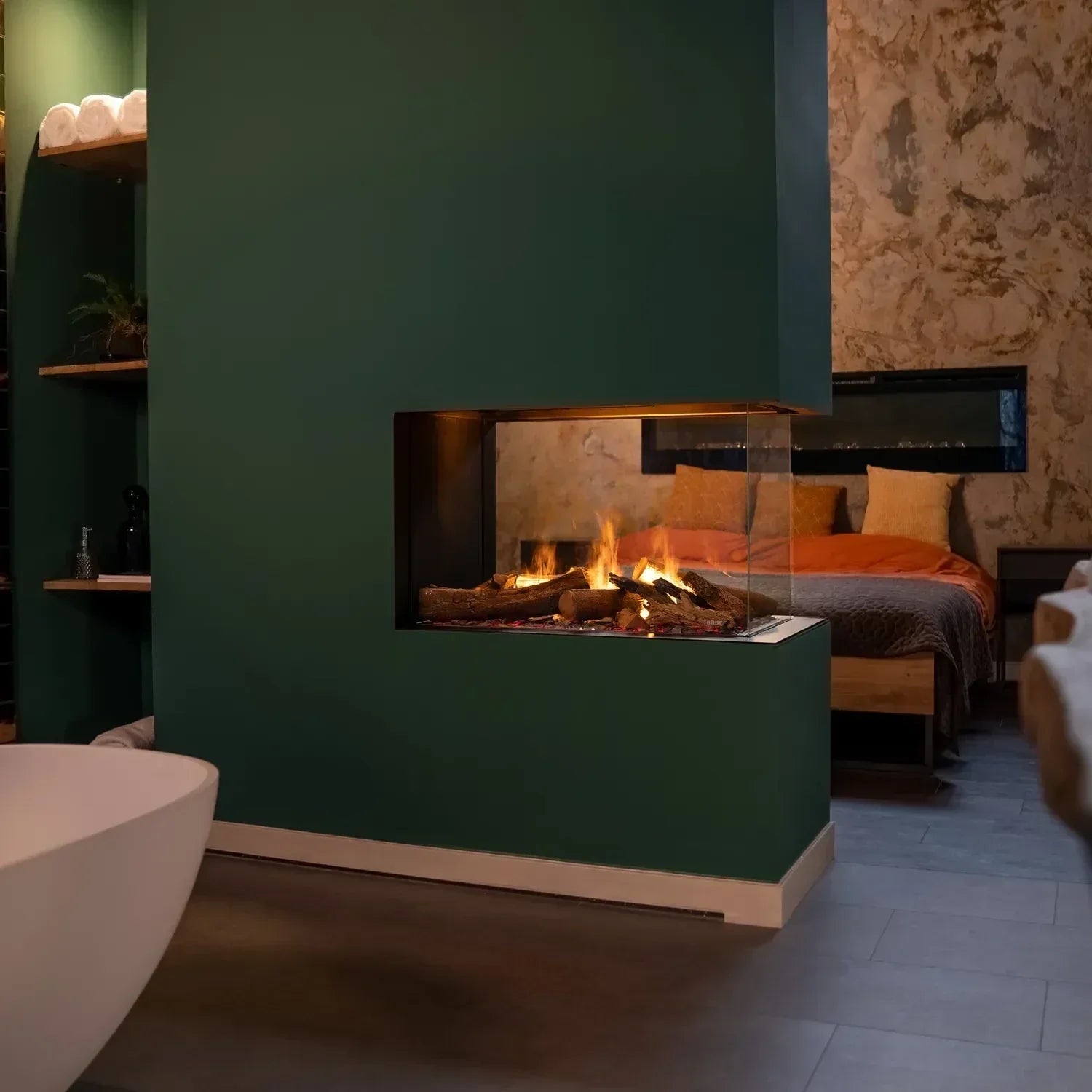
Some advanced electric fireplaces feature three-sided panoramic designs, allowing the realistic flames to be viewed from multiple angles and enhancing the immersive effect.
Holographic Flame Effects
Holographic flame effects represent the latest frontier in this field, using advanced optical techniques to create floating flame images that appear to be suspended inside the fireplace chamber.
These systems often combine multiple technologies to achieve maximum realism, layering projection and reflections to create a flame that appears three-dimensional.
If you’d like to learn more about how this technology works, check out this dedicated guide to holographic fireplaces.
Realistic Ember Beds and Fuel Bed Options
The fuel bed plays a fundamental role in creating an authentic fire experience.
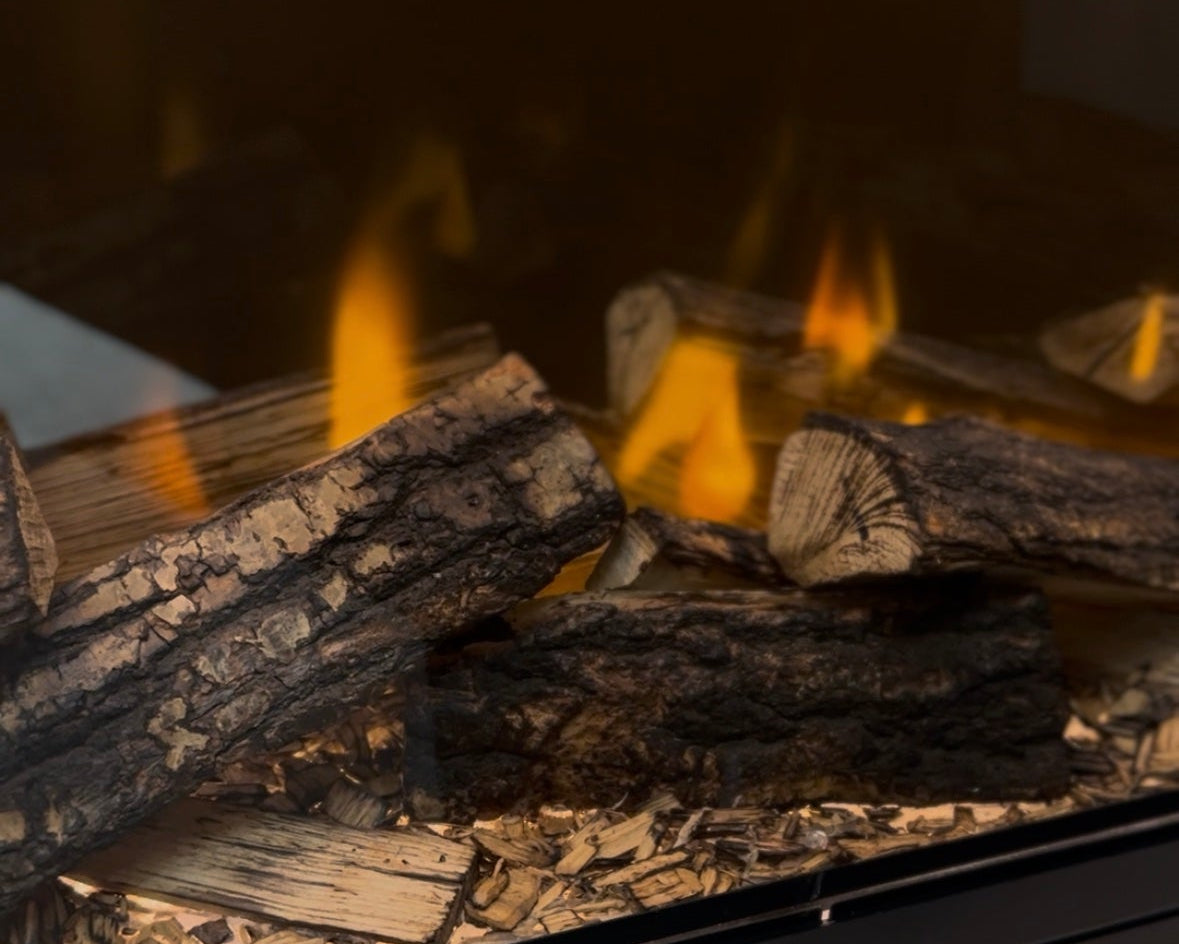
Modern electric fireplaces offer a variety of fuel bed options, including realistic logs moulded from real wood, glowing crystals, polished pebbles and aged driftwood.
Many of these elements are combined with lighting to create realistic ember effects.

Multi-Sensory Features
Beyond visual realism, many electric fireplaces now incorporate sound effects to enhance the authentic experience. These crackling sound features range from simple speakers playing recorded fire sounds to more sophisticated systems that synchronise audio with the flame patterns.
Some premium models also offer aromatherapy options, allowing you to add subtle wood smoke or other natural scents to complete the sensory experience of your electric fire.
A Note on Water Vapour Fireplaces
If you want the most convincing flame of all and are open to looking outside the electric fireplace range, it is worth knowing about water vapour fireplaces. These use ultrasonic transducers to create an ultra-fine mist that, when illuminated by precisely positioned LEDs, produces a genuinely three-dimensional flame you can pass your hand through. The trade-off is maintenance: the water tank needs refilling roughly every 8 to 10 hours of continuous use, and cleaning every 3 to 6 months to prevent mineral build-up. We list these as a separate category, so browse there if the absolute peak of realism matters more to you than simplicity.